Water Heater Not Working? A Forney, TX Troubleshooting Guide
Cold shower this morning? A water heater not working is one of the most disruptive things that can happen in a Forney home, especially when you’ve got a full house and a busy day ahead. We’re Copeland Home Services, your neighbors in Kaufman County, and we’ve been fixing water heaters across Forney, Heartland, and the surrounding area for years. This guide walks you through what to check first, what’s safe to troubleshoot yourself, and when it’s time to call a plumber.
Need help fast? Call us at (469) 720-4440 and we’ll get your hot water back on.
Key Takeaways
- Most “water heater not working” calls trace back to a tripped circuit breaker, a pilot light out, or sediment buildup in the tank.
- Electric and gas water heaters fail differently, so the first thing to check depends on which type you own.
- A leaking tank, a tripped T&P valve, or rotten-egg smells mean you should stop troubleshooting and call a professional.
- Yearly flushing helps prevent sediment buildup, the biggest hidden cause of short water heater life in our area.
A cold shower in July is miserable. Cold shower in a Forney January, when the lows dip into the 30s, is a different kind of bad. Either way, when your water heater quits, you want answers fast, not a sales pitch.
This guide walks you through what to check when your water heater is not working. Plain English. No jargon. We will cover the safe DIY checks, the stuff that usually points to a simple fix, and the moments you need to stop and call a pro before someone gets hurt or something floods.
We will be straight with you. Some of this you can handle with a flashlight and ten minutes. Other things, like gas valves, sealed combustion chambers, and anything involving a leaking tank, are not DIY territory. We will tell you which is which as we go.
We are a Kaufman County home services team with thousands of reviews from neighbors who have been right where you are. If the troubleshooting points to something bigger, our plumbing team can take it from there.
Why Your Water Heater Stopped Working: The Most Common Culprits
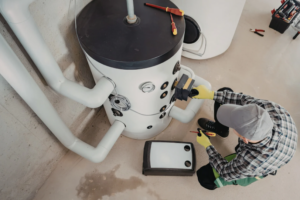
Most water heater failures come down to four or five usual suspects. Once you know the symptom, you can narrow it down fast. The split that matters most: do you have zero hot water, or hot water that runs out too quick?
No Hot Water at All vs. Not Enough Hot Water
Zero hot water usually means something stopped the heating process cold. On a gas unit, that points to a dead pilot light or a failed thermocouple. On an electric unit, it points to a tripped breaker, a popped reset button, or a burned out upper heating element.
Lukewarm water or hot water that runs out in five minutes is a different story. That points to sediment buildup on the tank bottom, a failing lower heating element, a bad lower thermostat, or a tank that’s just undersized for how many showers your house runs back to back. Hot water heater not heating fully almost always traces back to one of those four.
Gas Water Heater Problems: Pilot Light and Thermocouple
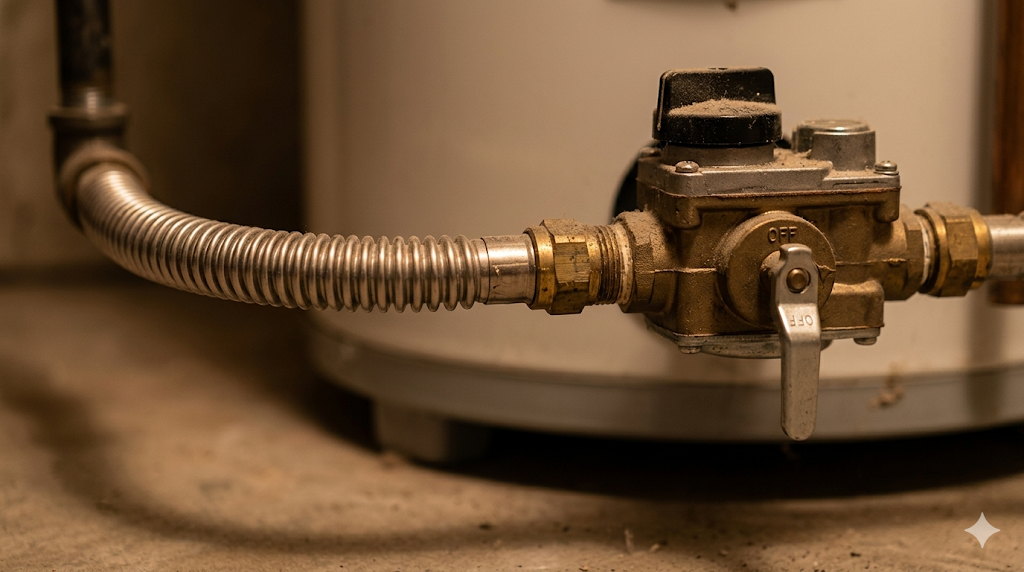
Pop the access panel on the bottom of a gas unit and look for a small blue flame. If the water heater pilot light is out, that’s your first clue. Try relighting it following the sticker on the tank. If it lights and then dies the second you release the gas control knob, your thermocouple is almost always the problem.
The thermocouple is a small sensor that sits in the pilot flame and tells the gas valve it’s safe to open. When it fails, it fails safe by shutting off the gas. No flame on the sensor, no gas, no heat. They’re cheap parts but the replacement involves the gas line, so this is where most folks call us.
While you’re down there, look at the burner flame when it fires. A strong blue flame is healthy. A yellow, weak, or flickering flame means a dirty burner assembly and incomplete combustion. That needs cleaning, not just a part swap.
Electric Water Heater Problems: Breaker, Heating Elements, and Thermostat
Electric units have two heating elements and two thermostats stacked top and bottom. The upper element does the initial heating. The lower element keeps the tank temperature steady. If your hot water runs out fast, the lower element is the likely culprit. If you have no hot water at all, look upper.
Run the checks in this order for water heater troubleshooting on an electric tank:
- Check the circuit breaker in your panel. Flip it fully off, then back on.
- Pop the upper access panel and press the red reset button on the high-limit switch.
- If power is good and reset doesn’t hold, the elements need a multimeter test for continuity.
If you’re past step two and still cold, that’s our cue. Our plumbing team can pull the elements, test them, and get you back in hot water the same visit.
Step-by-Step: What to Check Before Calling a Plumber
Before you pick up the phone, run through these four checks. Most water heater troubleshooting starts with the basics, and you can knock them out in about ten minutes. If anything feels off, stop and call us.
Step 1: Circuit Breaker or Gas Supply
Electric units run off a double-pole 30-amp breaker in your panel, usually labeled Water Heater. Flip it fully off, wait a few seconds, then flip it back on. If it trips again right away, stop. That points to a shorted element or wiring problem, and our electrical panel services page covers what we look at when breakers won’t hold.
Gas units need the supply valve open. The handle should sit parallel to the pipe. Check another gas appliance, your stove or furnace, to confirm Atmos Energy is delivering gas to the house. No flame on the stove means it’s a utility issue, not a water heater problem.
Step 2: Relight a Gas Pilot Light
Smell gas near the unit? Stop right there. Leave the house and call Atmos Energy from outside. No exceptions.
If it’s clear, here’s the water heater pilot light sequence:
- Turn the gas control knob to Pilot.
- Press the knob down and hit the igniter button.
- Keep holding the knob for a full 60 seconds after the flame catches.
- Release slowly, then turn the knob to Hot.
If the flame dies the second you let go, your thermocouple is bad. That’s a small part but it needs a pro. Our plumbing service page has more on what we replace during a service call.
Step 3: High-Temperature Reset (Electric)
Electric units have a red reset button behind the upper access panel. Pop the panel, fold back the insulation, and you’ll see it on the thermostat. Press it until you feel a click.
Then wait. It takes 30 to 60 minutes for the tank to heat back up. If the reset trips again, you’ve got a failing thermostat or a shorted heating element. Don’t keep resetting it. That button is a safety device, not a fix.
Step 4: Thermostat Setting
The EPA recommends 120°F. That’s hot enough for showers and dishes, safe for kids, and easier on the tank. Higher settings burn through anodes faster and speed up sediment buildup, which matters a lot around Kaufman County where mineral-heavy water is the norm.
We see thermostats cranked to 140°F or higher all the time, usually because someone bumped it during a renovation in Heath, Terrell, or out toward Crandall. Set it back to 120 and you’ll get more years out of the unit. If your water is still cold after an hour at the right setting, the heating element or thermostat is shot, and that’s where we come in.
Sediment Buildup: The Silent Water Heater Killer in Forney
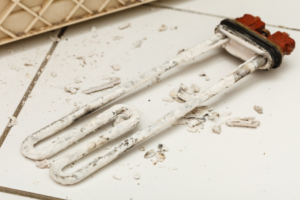
You’ve checked the breaker. You’ve relit the pilot. Tank still cold or making weird noises? Sediment is probably the reason. It’s the most overlooked cause of water heater failure across Kaufman County, and most homeowners never flush their tank once in 10 years of ownership.
Why Forney’s Hard Water Accelerates Tank Buildup
North Texas water typically runs 200 to 400 mg/L hardness, which puts us firmly in the hard to very hard range. That’s a lot of dissolved calcium and magnesium moving through every tank in town. When water gets heated, those minerals drop out of solution and settle on the bottom of the tank as a crusty layer of sediment.
On a gas unit, that layer sits right over the burner and acts like insulation. The burner runs longer and hotter to push heat through the crust, which is what causes the rumbling, popping, or kettle-like sounds you hear. On an electric unit, sediment buries the lower element and burns it out. Either way, you’re looking at higher energy bills, water heater sediment buildup eating away at the tank lining, and eventual failure.
The long-term fix is a whole-home softener. We handle that through our water filtration and plumbing services if you want to stop fighting minerals every year.
How to Flush Your Water Heater Tank
Here’s the full flush in seven steps:
- Turn off power at the breaker (electric) or set the gas valve to pilot.
- Shut the cold water supply valve at the top of the tank.
- Open a hot tap somewhere in the house. This breaks the vacuum so the tank drains.
- Hook a garden hose to the drain valve and run it to a floor drain or outside.
- Open the drain valve and let the tank empty fully.
- With the drain still open, briefly turn the cold supply back on in 30-second bursts. This stirs and flushes remaining sediment.
- Close the drain, refill the tank, then restore power or gas once water runs clean from the hot tap.
A couple of warnings. If the drain valve leaks or sticks after you flush, it needs to be replaced, which is a job for a plumber. And if the water coming out is rust-orange on a tank that’s 10 to 12 years old, the inside is corroding through. At that point, flushing won’t save it, and you should look at water heater replacement.
If your tank is still cold after the breaker reset, the pilot relight, and a full flush, you’ve done your part.
The next step is a plumber who can test elements, replace a thermocouple, or tell you straight whether the tank is past saving. Call our team at (469) 720-4440 or reach out through our plumbing service page, and we’ll work to get hot water back on the same day in most cases.
Frequently Asked Questions
How Long Does a Water Heater Repair Typically Take?
Most water heater repairs, such as replacing a heating element, thermocouple, or thermostat, take between one and three hours. More involved repairs like flushing a heavily sediment-clogged tank can run a bit longer. Copeland Home Services aims to complete the majority of common repairs in a single visit so Forney homeowners are not left without hot water overnight.
How Much Does It Cost to Repair a Water Heater in Forney?
Repair costs vary depending on the part and labor involved, but most standard fixes fall somewhere between $150 and $500. A simple thermocouple replacement tends to be on the lower end, while a dual heating element swap or a new gas valve will cost more. Copeland Home Services provides upfront estimates before any work begins so there are no surprise charges on your invoice.
Is It Safe to Keep Using My Water Heater If It Is Only Partially Working?
It depends on the specific problem. Lukewarm water caused by a failing heating element is generally not a safety hazard, but a gas unit with a faulty pressure relief valve, a leaking tank, or unusual smells should be shut off and inspected by a professional right away. If you notice rotten egg odors, hissing sounds, or water pooling around the base, stop using the unit and contact Copeland Home Services immediately.
When Should I Replace My Water Heater Instead of Repairing It?
A good rule of thumb is that if the unit is more than 10 years old and the repair cost exceeds 50 percent of the price of a new water heater, replacement is usually the smarter investment. Frequent repeat repairs, rust-colored water, and a visibly corroded tank are also strong signs that patching the existing unit no longer makes financial sense. Copeland Home Services can help Forney homeowners weigh repair versus replacement based on the unit’s age, condition, and current energy efficiency.
Can a Water Heater Not Working Affect My Home’s Water Pressure?
Yes, in some cases. Severe sediment buildup inside the tank can restrict water flow through the outlet pipe, which reduces pressure at your hot water taps even when cold water pressure seems normal. A failing pressure relief valve or a partially closed shutoff valve can also contribute to pressure problems. If you notice a noticeable drop in hot water pressure, mention it specifically when you call Copeland Home Services so the technician can inspect for both the heater and the supply line.
Does a Tankless Water Heater Have the Same Problems as a Traditional Tank Unit?
Tankless units share some issues, like mineral scale buildup from Forney’s hard water, but they do not face problems like tank corrosion or sediment settling at the bottom of a storage vessel. Tankless heaters can develop ignition failures, flow sensor errors, or venting blockages that standard tank units do not. Annual descaling service is especially important for tankless models in the Forney area given the high mineral content in the local water supply.
How Often Should a Water Heater Be Professionally Inspected?
Most manufacturers and plumbing professionals recommend a professional inspection once per year for both tank and tankless models. Annual service typically includes checking the anode rod, testing the pressure relief valve, inspecting connections for corrosion, and flushing out mineral deposits. Scheduling a yearly visit with Copeland Home Services can extend the life of your unit and catch small issues before they turn into emergency repairs.
Call to Discuss Your Home Service Needs Today!
Ready to book with Copeland Home Services? Or call (469) 720-4440 to speak with our team directly.