How to Reset a Circuit Breaker (And When to Call an Electrician) in Forney, TX
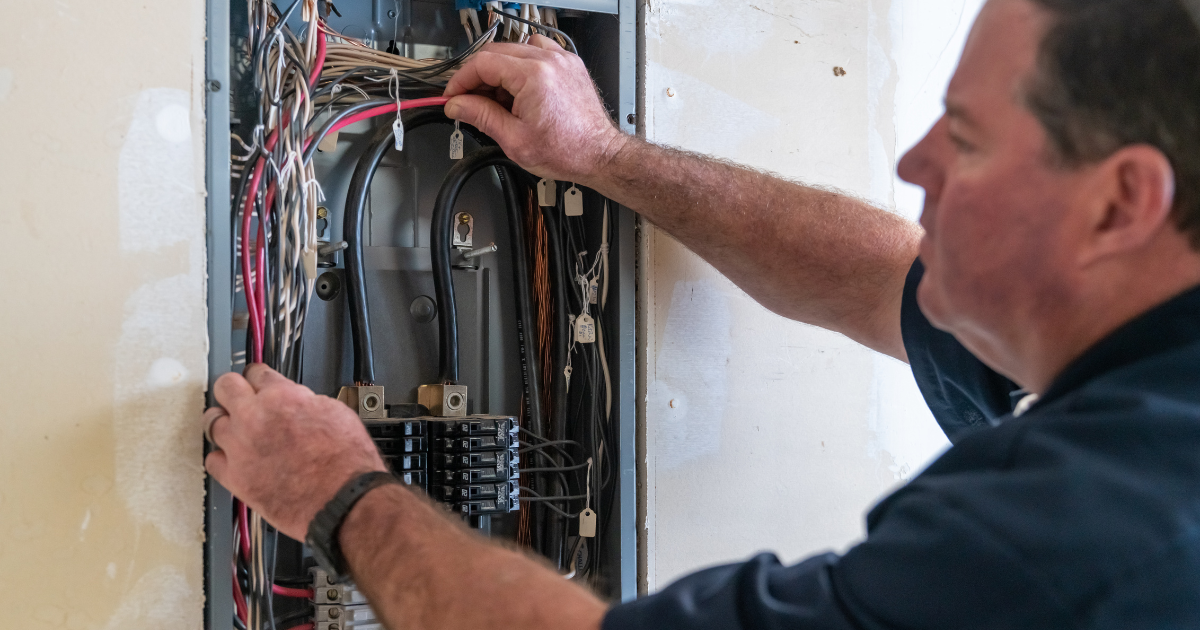
Power just cut out in half your house? Before you call anyone, there’s a good chance you can fix it yourself in under a minute. Knowing how to reset a circuit breaker is one of those basic homeowner skills that saves you a service call. We’re a licensed electrical team here in Forney, and we walk customers through this all the time. This guide shows you the safe way to reset a tripped breaker, plus the warning signs that mean you need to stop and call an electrician instead.
Breaker keeps tripping? Don’t guess. Call our Forney electricians at (469) 720-4440 for upfront pricing and same-day service.
Key Takeaways
- To reset a tripped circuit breaker, flip the switch fully OFF first, then back ON. Halfway doesn’t count.
- If the breaker trips again right after resetting, stop. That’s a sign of a short circuit or overloaded wiring.
- Burning smells, scorch marks, or a hot breaker panel mean you should call a licensed electrician immediately.
- Most repeat trips in Forney homes are caused by old panels, heavy summer AC loads, or faulty appliances.
Where Is Your Breaker Panel and Which One Tripped?
It’s 98 degrees outside. The AC just clicked off. Half the house went dark. Or maybe the master bedroom outlets are dead and your phone charger isn’t doing a thing.
Good news. Nine times out of ten, this is a tripped breaker. And you can fix it yourself in about two minutes.
Here’s what we’ll cover. First, how to find your panel and spot the breaker that tripped. Then the exact off-then-on sequence to reset it the right way. After that, the red flags that mean stop, step back, and call a licensed electrician before something worse happens.
This is a do-it-yourself guide with clear safety lines. If your breaker keeps tripping, smells hot, or shows scorch marks, you’re past the DIY zone. We’ll tell you when. Until then, grab a flashlight and let’s get your power back.
What Causes a Circuit Breaker to Trip in the First Place?
Your breaker trips because it’s doing its job. It senses something wrong on the circuit and shuts power off before a wire melts or a fire starts. Three things usually cause it: an overload, a short circuit, or a ground fault.
Knowing which one you’re dealing with matters. Resetting a breaker without finding the cause is like silencing a smoke alarm without checking for fire.
Overloaded Circuit
This is the most common reason a circuit breaker keeps tripping. Too many amps pulling through one wire. The breaker pops to keep that wire from overheating.
Classic example: a window AC, a microwave, and a fridge all running off the same old kitchen circuit. Older homes around Kaufman County and Heath were wired before anyone owned half the appliances we plug in today. Unplug a couple things, reset the breaker, and you’re usually back in business.
Short Circuit
A short happens when a hot wire touches a neutral wire. Current surges fast and hard, and the breaker slams off. This one is more serious than an overload.
Signs to watch for: a popping sound when the breaker tripped, a burning plastic smell, or black scorch marks near an outlet or switch. If you see any of that, don’t keep flipping the breaker back on. That’s when a tripped circuit breaker won’t reset safely, and you need eyes on it. Our team covers the common warning signs your home has electrical problems in more detail if you want to read up.
Ground Fault
A ground fault is when a hot wire touches something grounded, like a metal box, a damp wall, or wet skin. Bathrooms, kitchens, garages, and outdoor outlets are where these show up most.
GFCI outlets catch a lot of these before the panel breaker has to. But after a Texas rainstorm, we see plenty of tripped garage and patio circuits in Rockwall and Mesquite homes. Water and electricity don’t mix, and the breaker knows it.
How to Reset a Circuit Breaker: Step-by-Step
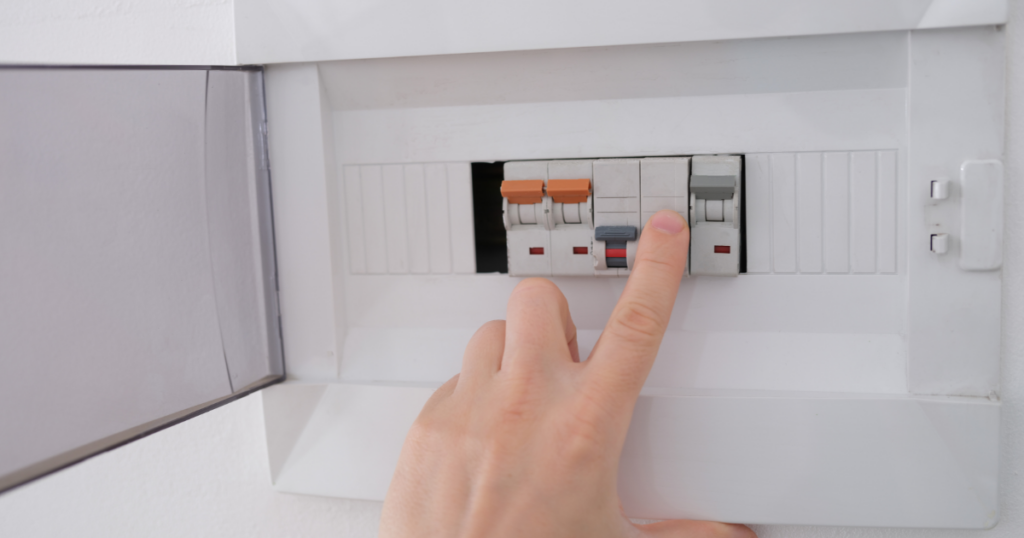
Resetting a breaker takes about 30 seconds once you know what you’re doing. Follow these five steps in order. Skip a step and you’ll likely trip it again the second you flip the switch.
Step 1: Find Your Electrical Panel
Your electrical panel is usually in the garage, a utility closet, or on an exterior wall near the meter. That’s where most newer homes around Kaufman County put them.
Older homes are a different story. We’ve found panels in hallway closets, laundry rooms, and even tucked behind a bedroom door. If you’ve never opened yours, look for a gray metal box about the size of a large textbook with a hinged door.
Step 2: Identify the Tripped Breaker
The tripped breaker is the one that isn’t fully ON or fully OFF. It’s stuck in the middle. That middle position is the part most people miss.
Look for these three signs:
- The switch sits halfway between ON and OFF
- A small red or orange indicator window is showing
- The breaker is fully flipped to OFF while the others point ON
Run your finger down the row. The odd one out is your culprit.
Step 3: Turn Off or Unplug Devices on the Affected Circuit
Before you reset anything, kill the load. Walk to the rooms that lost power and unplug the space heater, hair dryer, microwave, or whatever was running when it tripped.
If you skip this step, the breaker will trip right back the moment you flip it. The circuit overloaded once. It will overload again with the same stuff plugged in.
Step 4: Reset the Breaker
Yes, you really do need to push it all the way OFF first. Breakers have an internal latch that only resets from the full OFF position. A half-flip does nothing.
Here’s the move:
- Push the switch firmly toward OFF until you feel and hear a click
- Pause for a second
- Push it firmly back to ON
Use a confident motion. Tentative flipping is why people think their breaker is broken when it’s actually fine.
Step 5: Restore Power and Test
Go back to the room that lost power and plug devices in one at a time. Wait 10 to 15 seconds between each one. If the breaker trips again when you plug in a specific device, that device or that outlet is your problem.
If it trips again with nothing plugged in, stop. That’s a wiring issue, and it’s time to call a licensed electrician.
When Your Circuit Breaker Won’t Reset (Red Flags to Know)
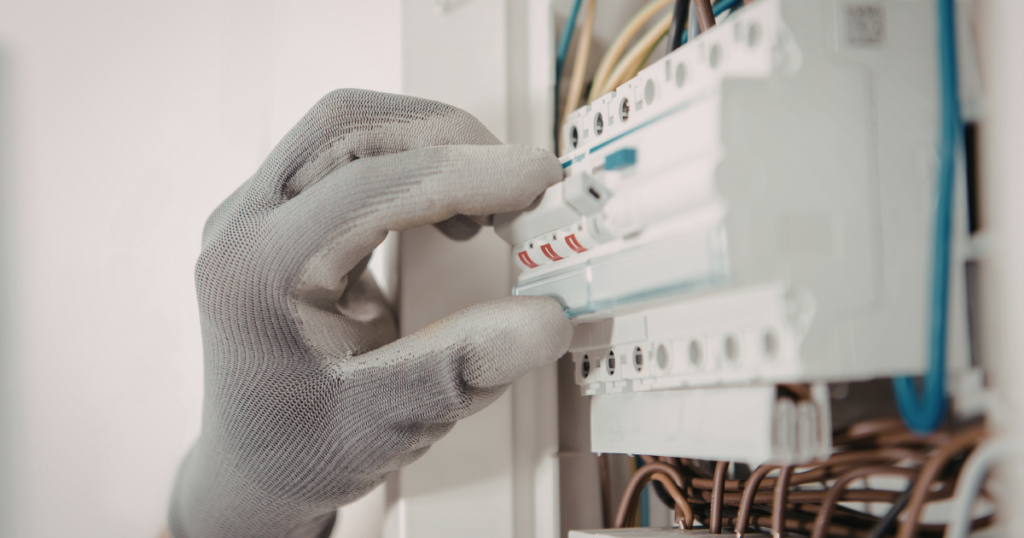
Sometimes the breaker tells you something is wrong. Listen to it. A tripped circuit breaker won’t reset for a reason, and forcing it can turn a small problem into a house fire. Here’s when to stop and call us.
The Breaker Trips Again Immediately
You flip it back on. It trips again in seconds. That’s an active fault on the circuit, usually a short or a damaged wire behind the wall.
Stop resetting it. Every time you flip that switch, you’re pushing current into a circuit that can’t handle it. The wiring heats up. Insulation breaks down. That’s how electrical fires start.
You Smell Burning or See Scorch Marks
The burning plastic smell near the panel is a hard stop. Black marks around a breaker or outlet mean arcing has already happened. This is a real fire hazard.
Kill the main breaker if you can do it safely. Then call us. We answer the phone no matter what time it is.
The Breaker Feels Hot to the Touch
A hot breaker is never normal. It means the breaker itself is failing, or the circuit has been overloaded for so long that heat is building up inside the panel. Either way, it’s done.
Don’t keep flipping it hoping it’ll behave. Knowing when to call an electrician for tripped breaker situations comes down to this: if you feel heat, smell anything off, or see discoloration, you’re past the DIY point.
The Panel Is Old or Has Known Issues
Plenty of older homes around Kaufman County and out toward Terrell still have panels from the 80s and 90s. Texas heat and humidity wear those down faster than you’d think. Nuisance tripping, loose breakers, mismatched labels, and burn marks inside the box are all signs you need electrical panel replacement in Forney, not another reset.
If your panel is a known problem brand like Federal Pacific or Zinsco, replace it. Those panels have documented failure rates and insurance companies don’t like them.
Breaker won’t stay on? Don’t keep flipping it. Call our team at (469) 720-4440 and we’ll diagnose the fault safely.
How Circuit Breakers and Your AC System Are Connected in Forney
Here’s something most folks don’t realize. If your circuit breaker keeps tripping and it’s the one feeding your outdoor AC unit, the breaker probably isn’t the problem. Your AC is. The breaker is just doing its job and shutting things down before something burns up.
Why Your AC Trips the Breaker More Often in Summer
July and August in Kaufman County push AC systems harder than any other time of year. When the outdoor unit runs nonstop in 100-degree heat, small problems turn into trip-the-breaker problems fast.
The usual culprits we find on service calls:
- Low refrigerant making the compressor work overtime
- A dirty condenser coil choking airflow across the outdoor unit
- A weak or failing capacitor on its last legs
- A compressor pulling more amps than the 240V breaker is rated for
Any of these will make the system draw too much current. The breaker trips to protect the wiring. Reset it and it’ll trip again in 20 minutes. That’s your AC telling you it needs help, not your panel. We dig into this more in our guide on why your AC blows warm air and how to fix it.
What to Check Before Calling for AC Repair
Run through this quick list before you pick up the phone:
- Thermostat set to COOL and at least 3 degrees below room temp
- Indoor air handler switch in the attic or closet flipped ON
- Outdoor disconnect box next to the condenser pulled out and pushed back in
- Condenser coil clear of grass clippings, cottonwood, and leaves
If the breaker trips a second time after that, stop resetting it. You’ll only stress the panel. Our techs handle both electrical and HVAC work, so one truck rolls out and figures out which side the trouble is on. No second visit. No second trip charge.
Frequently Asked Questions
How Often Should a Circuit Breaker Be Replaced?
Most circuit breakers last between 30 and 40 years, but age alone is not the only factor. If your breaker trips frequently, feels loose, or no longer holds a reset, it likely needs replacement regardless of its age. Copeland Home Services can inspect your panel and recommend whether individual breakers or a full panel upgrade makes more sense for your home.
Is It Safe to Reset a Circuit Breaker More Than Once?
Resetting a breaker once after identifying and removing the cause of the trip is generally safe. Resetting it multiple times without addressing the underlying problem can damage the breaker itself and create a fire risk over time. If your breaker trips again after a second reset, stop resetting it and call a licensed electrician.
Can a Faulty Circuit Breaker Raise My Electricity Bill?
A failing breaker can allow a circuit to draw inconsistent power, which may cause appliances to work harder and consume more electricity. In some cases, a breaker that does not trip when it should lets an overloaded circuit run unchecked, stressing your wiring and connected devices. Having Copeland Home Services inspect aging or frequently tripping breakers can help catch these issues before they affect your utility costs.
What Is the Difference Between a Standard Breaker and a GFCI or AFCI Breaker?
A standard breaker protects against overloads and short circuits, while a GFCI breaker also detects ground faults and cuts power to prevent shock near water sources. An AFCI breaker goes a step further by detecting dangerous arcing faults inside walls that standard breakers would miss entirely. Many updated electrical codes now require AFCI or GFCI breakers in specific areas of the home, so older Forney properties may need upgrades to meet current standards.
Will Homeowners Insurance Cover Damage Caused by a Tripped or Failed Breaker?
Coverage depends on your specific policy and the cause of the damage. If a breaker failure leads to a fire or appliance damage, many policies will cover the resulting loss but not the cost of repairing the electrical panel itself. Documenting any electrical issues and having repairs done by a licensed professional, like the team at Copeland Home Services, can support a claim if one becomes necessary.
Can I Install a Higher Amperage Breaker to Stop Frequent Tripping?
Swapping in a higher amperage breaker without upgrading the wiring on that circuit is a serious safety hazard and should never be done as a shortcut. The wiring in your walls is rated for a specific amperage, and a breaker that exceeds that rating can allow the wire to overheat and catch fire before the breaker ever trips. If a circuit consistently cannot handle your power needs, the correct solution is a proper circuit upgrade performed by a licensed electrician.
How Long Does a Professional Electrical Panel Inspection Take?
A standard panel inspection typically takes one to two hours depending on the size of the home and the condition of the existing equipment. The electrician will check for signs of wear, improper wiring, outdated components, and code compliance issues. Copeland Home Services serves Forney and the surrounding area, and scheduling an inspection is straightforward through their service line or website.
Ready to Get Started with Copeland Home Services?
Call (469) 720-4440 to speak with our team directly, or reach out using the form below.
Reach out today and let’s talk about how we can help.